Gear
What to put in your ruck
What to carry for an hour, for a half day, and for a serious march — and what to leave at home.
By haultrek editorial · 7 min read · reviewed 16 August 2026
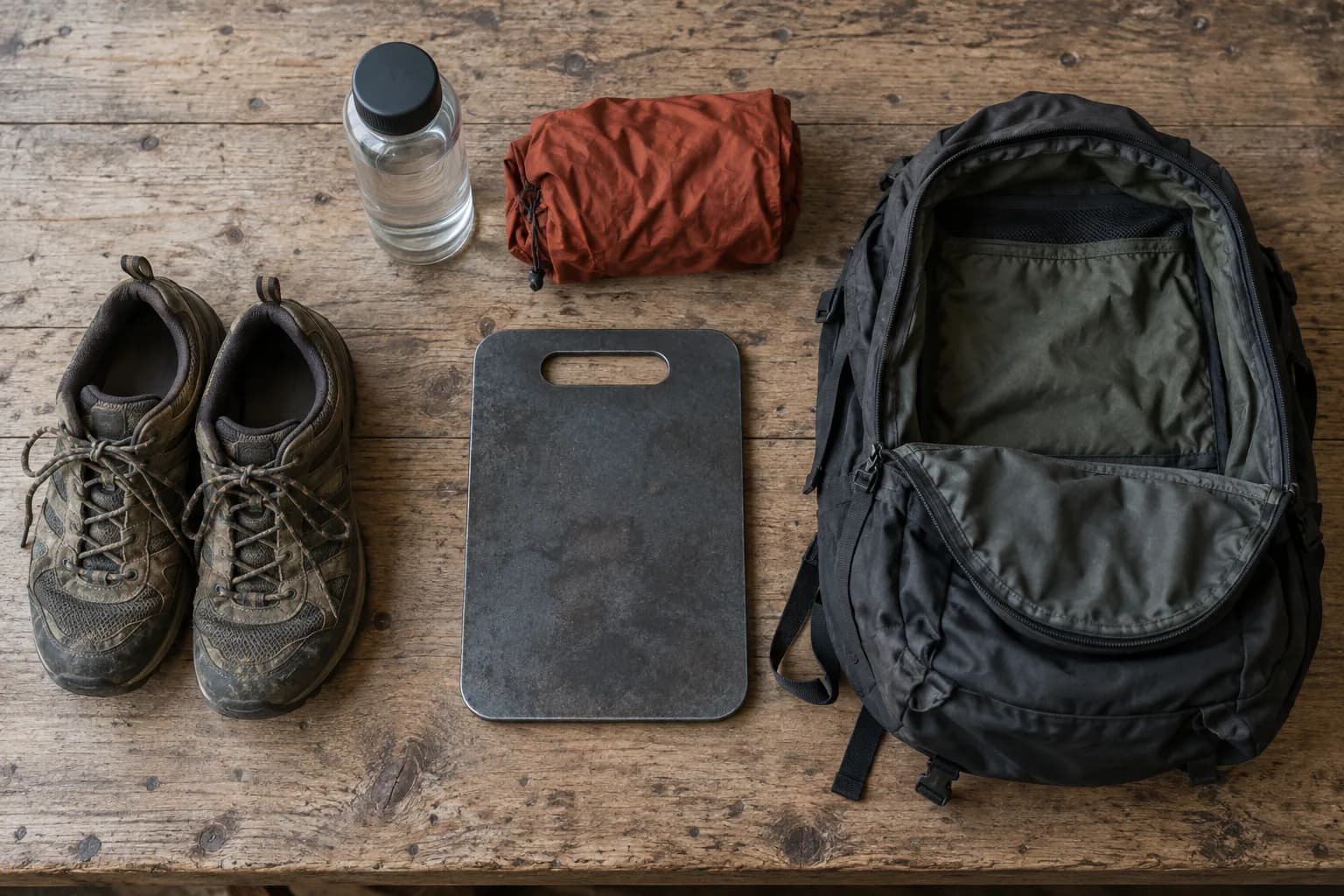
There are two schools of thought on what to carry. One says the weight should be useful gear, so the pack does a job. The other says weight is weight, so carry a plate and keep the bag simple. Both are defensible, and which you choose mostly depends on how far you are going.
Dead weight vs useful weight
For an hour on local paths, dead weight is fine and simpler. A ruck plate or bottled water sits where you put it, does not shift, and packs in ten seconds.
Past about two hours, or anywhere you cannot easily bail out, useful weight starts winning. Water you can drink, a shell you can wear, and food you can eat are all weight that earns its place — and a walk that goes wrong is much better with them than without.
The cheapest load there is
Water is 1 kg per litre, distributes well, and can be poured out if a walk goes badly. It is the best beginner ruck weight and remains a sensible component at any level.
Under an hour, close to home
- Your weight — plate, water, books, whatever is to hand.
- Phone.
- That is genuinely it.
Resist the urge to build a survival kit for a 5 km loop around a park. Overpacking a short ruck is the most common beginner habit and it teaches you nothing except that your shoulders hurt.
One to three hours
| Item | Typical weight | Why |
|---|---|---|
| Water, 1–2 L | 1–2 kg | Doubles as load and as water |
| Rain shell | 0.3–0.5 kg | Weather turns; a wet hour is a miserable hour |
| Snack | 0.1–0.2 kg | Anything over 90 minutes benefits |
| Small first-aid kit | 0.2–0.3 kg | Tape for hot spots, mainly |
| Phone and a little cash | 0.2 kg | Bail-out options |
The first-aid kit is mostly there for your feet. Zinc oxide tape and a hydrocolloid dressing prevent more ruined walks than anything else you can carry at that weight.
Half a day and beyond
- Water: 2–3 L, or less plus a means of refilling.
- Real food, not just gels — you are out for hours at a low intensity, and normal food works.
- An insulating layer. A fleece or light puffy weighs almost nothing and matters enormously if you stop moving.
- Rain shell, regardless of forecast.
- Spare socks. Changing halfway is startlingly effective.
- Headlamp if there is any chance of finishing near dusk.
- A proper first-aid kit, including blister care and painkillers.
- Power bank, if you are navigating by phone.
At this point your gear alone may exceed your target load, which is the goal. If it does not, top up with water rather than adding a plate — it keeps the pack's centre of gravity where you want it and you can drink the difference.
Things people carry and should not
| Item | Problem |
|---|---|
| Sand or loose gravel in a bag | Shifts constantly, abrades the pack, unpleasant to carry |
| Bricks or scrap metal | Hard edges against your back; nothing to pad them into place |
| Dumbbells or kettlebells | Concentrated in one spot; awkward to secure; a dropped one damages the pack |
| Anything unsecured | A load that moves as you walk is a load you spend the whole walk correcting |
Whatever you carry, it needs to be padded and compressed into place. That is a packing question more than a gear question.
Put your actual gear into the actual bays and get scored on load, balance and reach — with the centre of gravity computed from where each item sits.
Lay it out in Pack Your Ruck →About ruck plates
A purpose-made plate is flat, sits high against your back in a dedicated sleeve, and does not move. That is worth real money once you are carrying above roughly 15 kg regularly, because at that weight bad placement stops being uncomfortable and starts being a problem.
Below that, it is a convenience rather than a necessity. Plenty of people ruck for years on water and books, and their training is not worse for it.